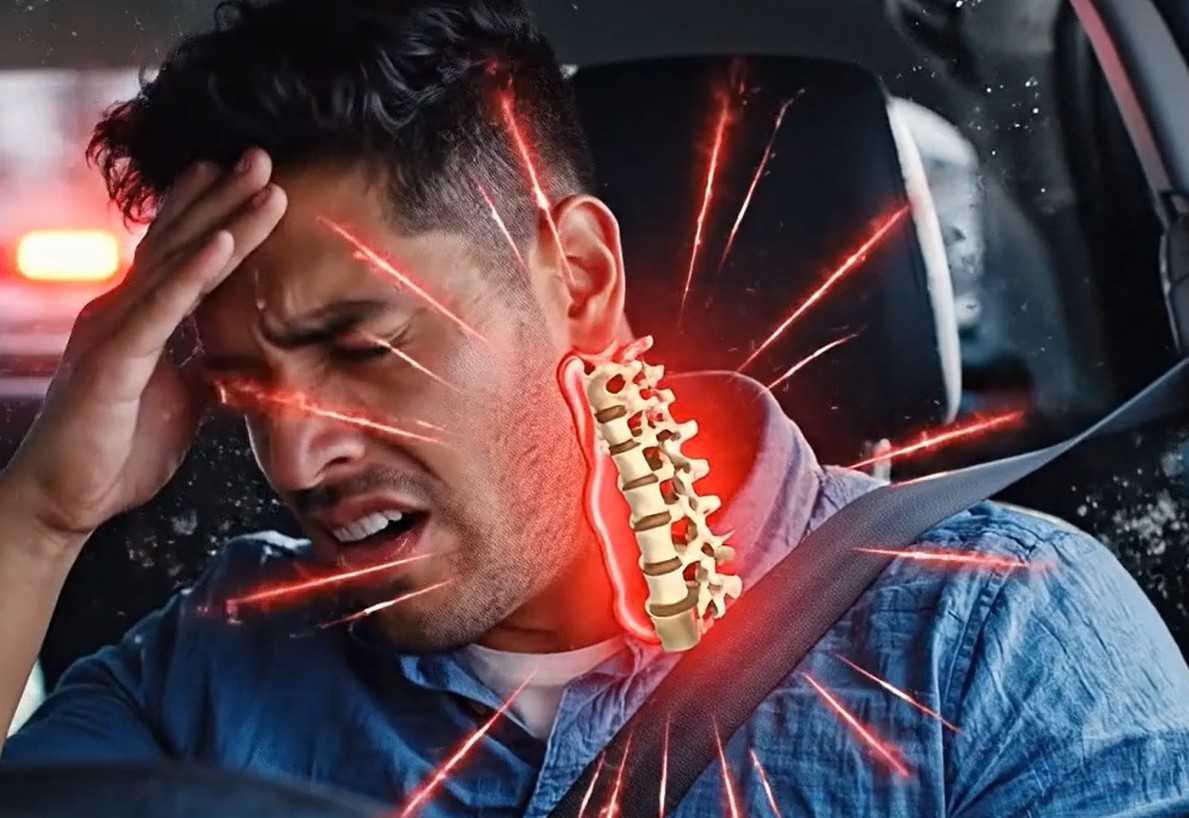
Why Neck and Shoulder Injuries Happen in Car Accidents — Even When the Crash Looks “Minor”
Car accidents don’t have to be dramatic to cause real damage. Even a slow‑speed collision can create enough force to injure the neck and shoulders — two areas of the body that are incredibly vulnerable during impact.
What Has to Happen for a Neck or Shoulder Injury to Occur?

During a crash, your body is pushed in one direction while your head, neck, and shoulders lag behind for a split second. This creates a whip‑like motion that overstretches:
Neck muscles
Shoulder tendons
Ligaments that stabilize the spine
Nerves that run from the neck into the arms
This sudden motion is far beyond what the body is designed to handle. Even without broken bones, the soft tissues can be strained or torn.
Why Symptoms Don’t Show Up Right Away
Right after a crash, adrenaline acts like a natural painkiller. Hours or days later, inflammation sets in — and that’s when people start noticing stiffness, headaches, shoulder pain, or tingling in the arms.
Why One Person Walks Away Unhurt While Another Suffers
This is one of the most confusing parts of car accidents. Injury severity isn’t about fairness — it’s about physics.
A person can cause a fatal crash and walk away because:
Their seatbelt and airbag worked perfectly
Their head was aligned with the headrest
Their muscles were tense at impact
Their vehicle absorbed most of the force
Their body didn’t twist or rotate
Meanwhile, someone else may absorb the worst of the impact and suffer long‑term pain.
Your Pain Is Real — Even If the Crash Was “Small”
Neck and shoulder injuries deserve attention, not minimization. Getting an early chiropractic evaluation can reduce inflammation, restore movement, and prevent long‑term complications.
